
By Anne K. Kaler
Writers use patterns the same way that fabric designers use patterns – as guides for their material. (Note the pun there – both use “material” which means it is “of matter” or words.) Writers use the patterns called formulas to make their words conform to an understood, preconceived expectation for the reader.
 And readers become intensely annoyed when the pattern/formula/genre is misrepresented. Classic story. The well-meaning children of a church pastor bought him a surprise book – Erskine Caldwell’s God’s Little Acre — thinking that the subject matter was suitable for a man of the cloth. It wasn’t.
So, knowing what the pattern of a book is becomes paramount in the construction of that book. That’s why there are genres or types of books which are classified by the patterns they use. Often times the title itself will suggest enough of the ultimate pattern for me to want to read the book. Continue reading “How to Write Using a Pattern”

 Recently, I found myself binge-watching United States of Tara, Showtime’s now concluded series. I was reminded of the series because May is Mental Health Month and the series deals with the Dissociative Identity Disorder (DID) of Tara, wife, mother and artist. It is a comedy-drama, quirky, well acted and thought provoking.
 Romances deal with character development while mysteries depend on plot development. The hybrid of the two genres is called romantic suspense which often depends on coincidence to make a satisfying read. However, something vital gets lost when coincidence strays into the realm of the unbelievable ending.
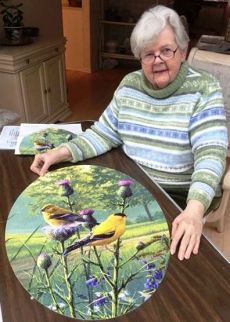 It is finished. The puzzle, that is. The writing is never finished.
 Pearl S. Buck Writing Center